Lean in a chaotic world
For decades, lean has been a powerful force for transformation — helping organizations build stability, reduce waste and create value through continuous improvement. But today we find ourselves in a rapidly changing world where stability is no longer the norm. That is why I want to pose a question I wish to explore: how can we, as lean practitioners, adapt lean thinking to an era of disruption and uncertainty?
I have spent much of my career studying lean and sharing that knowledge with the world, always believing that organizations can be designed to perform better, eliminate waste and continuously improve. However, what I have realized is that the world in which these principles were developed was relatively stable. Yes, there was always competition and the need to improve, but the basic assumption was that the external environment would not change so drastically or so frequently as to transform entire industries overnight.
That assumption no longer holds. Today, companies face geopolitical instability, economic shifts, rapidly evolving technologies — especially artificial intelligence (AI) — and new social expectations regarding work and employment. As lean practitioners, we need to change our mindset: from optimizing under stable conditions to adapting and surviving in a volatile world.
Change is happening faster than ever
While preparing this talk, I witnessed dramatic changes taking place. One of the companies I admire most — and which has deeply embedded lean in its operations — recently had a rather worrying discussion. With the possible introduction of new tariffs, this company found itself forced to set up large manufacturing operations in the United States much faster than it had ever planned before.
And this is not an isolated case. Across many sectors, companies are dealing with geopolitical shifts, trade restrictions, labor shortages and new regulatory pressures. Add to this the change in the very nature of work — with employers and employees abandoning any sense of mutual obligation — and the challenge becomes even greater.
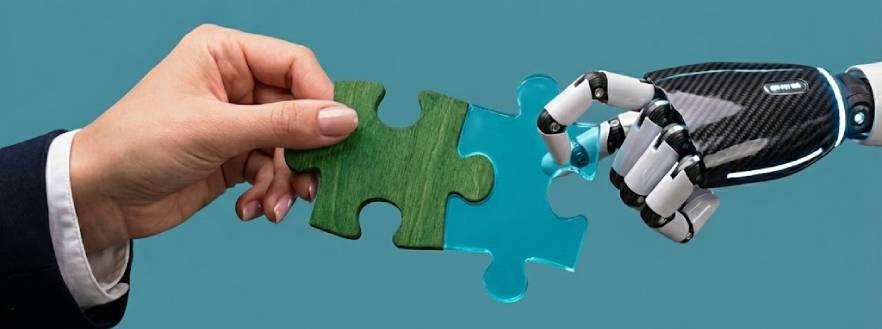
Technology is accelerating all of this. Artificial intelligence (AI), in particular, presents a paradox for lean thinkers. On the one hand, automation and AI-driven decision-making can eliminate enormous inefficiencies. On the other, much of this technology seems designed to eliminate people rather than empower them. For decades, we in the lean community have insisted that lean is not about laying off workers, but about creating more value with the same people. Now, however, we face a scenario in which entire workforces may be replaced by technologies that are not being developed out of necessity, but simply because it is possible to do so.
At the same time, climate change is bringing a level of unpredictability we have never seen before. Companies are no longer just planning for normal market fluctuations; they now need to prepare for supply chain disruptions caused by wildfires, hurricanes, droughts and other extreme weather events.
Faced with all this, the natural reaction would be to say: Perhaps lean itself needs to be rethought. But here is the good news: we do not need to reassess our fundamental principles and methods. What we need is a new orientation — a new way of applying lean to help organizations navigate chaos while maintaining the stability needed for long-term success.
Why Toyota keeps winning
I want to highlight an example of how a lean mindset can help companies navigate times of uncertainty instead of being crushed by it.
A few years ago, the entire automotive industry became fixated on the idea that battery electric vehicles (BEVs) would be the only future of transportation. CEOs, policymakers and analysts declared that by 2035 we would see only BEVs on the streets. Major manufacturers rushed into this market, eager to prove they were “100% committed” to electrification.
Except Toyota.
Toyota took a different path. Instead of betting everything on a single technology, it adopted a portfolio of solutions: it refined hybrid vehicles and invested in plug-in hybrids, hydrogen fuel cells, hydrogen-powered internal combustion engines and also BEVs.
At the time, the company was ridiculed for this. Many accused it of being outdated, of resisting change. But Toyota was not resisting change; it was managing uncertainty. It knew that markets, technologies and infrastructure would evolve in unpredictable ways, and it did not want to run out of options.
Fast forward to today, and the narrative has changed. The automotive industry is beginning to realize that BEVs are not the perfect solution for every customer or market. Toyota's diversified approach has left it in a much more favorable position than the companies that bet everything on a single technology.
This is the kind of thinking lean organizations need to adopt. Instead of trying to predict the future, we must prepare for multiple possible futures.
Recovery rather than robustness: the need for rapid adaptation
For years, companies were advised to accumulate cash and resources as a way to protect themselves against uncertainty. And while financial stability is important, it is not enough.
Toyota's philosophy has never been to try to predict every possible adverse scenario or simply to withstand crises. Instead, the company focuses on recovering quickly when disruptions occur. This means:
- Developing human capital — training team members to solve problems and make decisions quickly.
- Creating adaptable supply chains instead of relying on fixed, rigid systems.
- Investing in resilience, and not just preparing for a specific set of crises.
During the COVID-19 pandemic, for example, Toyota showed how this philosophy works in practice. While other manufacturers struggled to cope with supply chain shortages, Toyota relied on a network of adaptable team members trained to solve problems quickly and keep operations running.
This capacity to recover — and not merely to resist — is what distinguishes a truly resilient organization from one that is only prepared for the last crisis, but not for the next one.
Scaling lean: the missing piece
Chaotic scenarios often demand major changes, profound transformations in our organizations. In what I like to call the “nail it, scale it, sail it” cycle (nail it, scale it, sail it), the main challenge for us lean thinkers is to scale lean effectively.
We are very good at nailing it — building MVPs, designing new systems, running pilot projects and solving initial problems. We also know how to sail it well — sustaining lean in mature, stable organizations. But when it comes to scaling — taking an initial success and rapidly expanding it across the entire company or industry — we struggle.
I have worked with startups in autonomous vehicles and AI-driven industries that had brilliant ideas but could not implement them at scale because they lacked structured operating and management systems. And without these systems, the best ideas in the world simply do not thrive. Unfortunately, creating these systems is a rather complex challenge — and this is a gap in the lean movement that we urgently need to address.
The lean dream: a stable platform for value creation
In 1950, after a financial crisis that almost destroyed the company, Toyota was forced to split into Toyota Motor Sales and Toyota Motor Company. This humiliation led to a powerful resolution: “Never again.” From then on, Toyota dedicated itself to building a stable platform for value creation, capable of ensuring long-term success for customers, employees, suppliers and investors.
The dream was to create lifelong relationships:
- Customers for life, by always being the best option.
- Employees for life, through continuous development and new challenges.
- Suppliers for life, by fostering mutual growth and improvement.
- Investors for life, by delivering sustainable, long-term value.
Unlike companies focused on short-term gains, Toyota prioritized resilience, ensuring it could weather economic turbulence without compromising its foundation. The result? In 74 years, Toyota has never laid off a permanent employee for financial reasons — a feat few companies in the world manage to replicate.
Some say this dream is impossible, but I refuse to believe that. Why shouldn't every organization seek to build a stable foundation where all stakeholders come out winning?
This vision remains my guiding star — and it should be yours too.
Final thoughts
The world still needs lean thinking — even if it does not yet realize it.
We, as lean practitioners, have a responsibility to help organizations navigate uncertainty, build resilience and generate value even in turbulent times.
Our challenge is not to rethink lean, but to rethink how we apply it in an era in which stability is no longer guaranteed.
Let us embrace chaos — rather than fear it — and move forward, together.
This article is a summary of Jim Womack's presentation at last year's Lean Global Connection! We are back this year with the fifth edition of this flagship event of ours!