In pursuit of the "perfect order"
In an increasingly competitive world, when a team executes a project masterfully and delivers results, that alone is reason to celebrate. Imagine, then, when that success goes beyond the company's local reality and becomes a worldwide feat.
That is what happened at Knauf do Brasil, the Brazilian unit of this German company, founded more than 90 years ago in Europe, which today operates in 96 countries, with 150 plants and more than 41,000 employees. In Brazil it has two industrial plants, in the cities of Queimados, in Rio de Janeiro, and Camaçari, in Bahia, which produce drywall systems, gypsum-based prefabricated structures for the construction industry.
With the support of Lean Institute Brasil (LIB), Knauf Brazil recently implemented a broad-scope project at its Rio de Janeiro plant. The initiative was so successful that it crossed borders: in an internal competition among 600 projects from company units around the globe, the work done here by the Brazilian team was chosen as the “best in the world” in a specific category that covers initiatives aimed, for example, at offices. The Brazilian unit was thrilled with this recognition because it meant the possibility of replicating the project at other units, not only in Brazil but around the world.
In search of the efficient order
It was no accident. Named “Order to Cash,” the project had the challenge of improving the customer relationship process, optimizing the entire production flow, from order to delivery. The journey covered six areas of the company: field sales, inside sales, finance, Production Planning and Control (PPC), logistics and shipping.
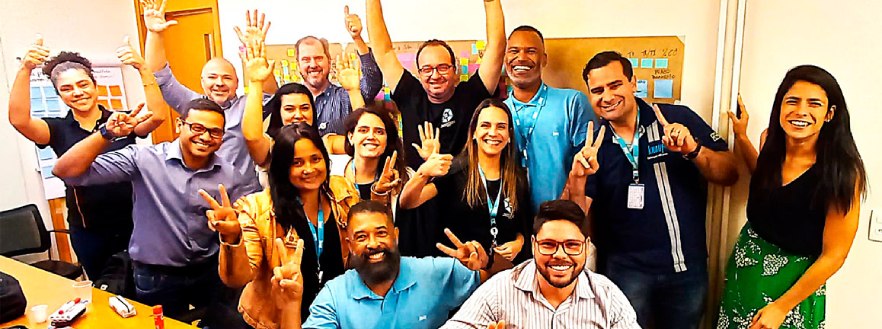
The undertaking was huge. It involved more than 50 employees in just over a year of work. It reached, directly or indirectly, practically every department. It significantly transformed a large part of the processes and structures. It considerably changed people's mindset. And it has been accumulating impressive results that began to appear in just over six months of implementation.
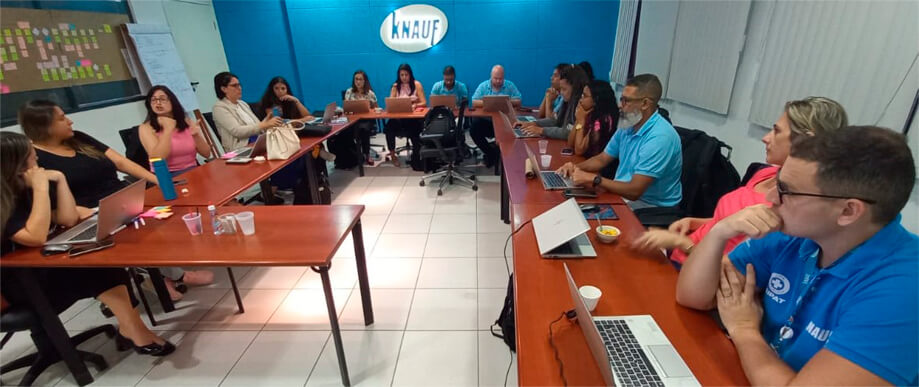
Just to give an idea of the impact, before this transformation Knauf ranked third in its sales ranking in Brazil. After the project, the organization regained leadership of the national market. A historic achievement. The lean system, of course, was not the only ingredient or the sole reason, but it contributed decisively to making this happen, delivering a proven improvement in customers' perception of value.
“We had phenomenal gains”
There are plenty of numbers to prove it. The project increased the Net Promoter Score (NPS), one of the main indicators for measuring customer loyalty, by more than 280%, considerably exceeding the initial target.
Before the implementation, the NPS stood at 17, which was an unsatisfactory position with a lot of room for improvement, according to the company's leadership. The initiative exceeded expectations: after the journey, the NPS reached 65, a result that surprised even the most optimistic.
A similar phenomenon occurred with another very relevant indicator, Customer Satisfaction (CSAT), which measures customer satisfaction. Just to give an idea, before the initiative the CSAT stood at 49%. The target set by the company was 75%. And with the transformation, it quickly reached 83%, which everyone in the company considered “a phenomenal gain.”
There was also a significant impact in reducing times in the production area. Two important indicators improved substantially: waiting time fell by 51%, and processing time was reduced by 20%. These reductions were fundamental to keeping the service flow stable.
There was also a significant reduction in lead time, an indicator that measures process cycle time, which, for example, fell by more than 60% in the processes related to manufacturing finished products, and by more than 50% in the processes for handling the raw materials used in manufacturing.
The quality of the work also visibly increased. An indicator that measures the “number of things done right the first time” grew considerably. This is because the company began spreading among employees the idea that “quality starts with the person.”
“Quality work starts with whoever performs it. If that doesn't happen, everything gets off to a bad start”, summed up Nilson Rodrigues da Silva, Project Manager at LIB and one of the consultants who have been supporting the lean transformation at the company.
“When I do my part of the work and hand it over to the next process with correct and complete information, besides speeding up the process and avoiding losses, I also minimize the chance of having problems. That was a mindset we developed a lot in the employees”, the consultant added.

Mapping is a must
The project was divided into a series of stages. The first was planning and the kick-off, that is, the starting point, which took place at a first in-person meeting at the company, in which LIB consultants and the Knauf team precisely defined a series of important steps: the entire program content of the lean journey, including the implementation “agenda,” as well as all the projects that would be carried out and the deliverables that would need to be pursued in each phase.
At this start of the project, it was decided that the teams would need to be developed in important concepts and practices of the lean system. For example, in the foundations of mindset, in the “four types of problems,” in Value Stream Mapping (VSM), in preparing A3s and in Daily Management (DM).
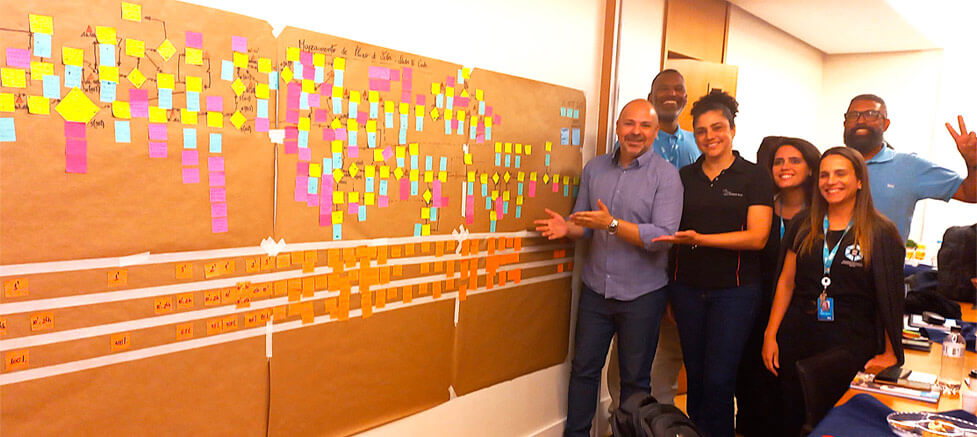
The second part of the project was based on carrying out a detailed diagnosis of the organization's entire value stream. To do this, LIB consultants and the Knauf team applied VSM in practice.
“A well-understood problem is a problem almost solved. So, after working on the conceptual part of VSM with the teams, we soon moved on to practice, that is, drawing Knauf's value stream”, Nilson recalled.
In this activity, a rigorous and detailed analysis of the flow was carried out in order to draw and analyze the “current state,” to see the processes that were unnecessary and could be eliminated, as well as the opportunities to improve those that were necessary.
This produced a series of relevant “discoveries.” In other words, there were many processes with deviations and problems that caused rework and dissatisfaction for both internal and external customers.
“Pains” finally exposed
In this first phase, with the support of LIB consultants, the team drew up a map that revealed “74 pains,” many of them the result of recurring problems that undermined performance but had not yet been properly “exposed.”
For example, a series of mismatches between Shipping and Sales that caused vehicles to come pick up raw materials even when the responsible department had not yet placed the order – the result of “old habits,” typical phenomena of traditional management that keep perpetuating practices without analyzing them day to day.
Another example was “excessive blocking by finance.” That is, the customer can and wants to buy, but for some reason is not allowed to, because they are blocked, often due to “simple” bureaucracy and/or internal slowness; other times because their registration is out of date.
Also in logistics. For example, in the Warehouse, which was short of space, but when it was analyzed much more closely, it became clear that there was indeed an excess of what “wasn't needed” and a shortage of what was essential.
The analysis of the “Current State” also showed that departments that needed to work in more connected and integrated ways remained isolated, “each in its own box,” with little horizontal connection and operating increasingly vertically, in “silos.”
It was noted that this disconnection occurred, among other things, because there was little exchange of information between departments. This created a lack of knowledge among everyone, harming the internal customer-supplier relationship.
Other kinds of bottlenecks were noticed. For example, it was found that, not infrequently, someone would ask the customer to pick up products, but internally that request was not passed on to the value stream as a whole.
Looking at the horizon
An important countermeasure was then to design, in the “Future State,” a flow conceived so that people would work in a more “horizontal” way. So that the whole team, in a multidisciplinary way, would start thinking about their tasks, their work and the delivery of value, regardless of the departments they work in.
This horizontal flow sought to “break down the silos,” trying to establish a connection between internal customer and supplier in which the main concern was no longer “one's own box,” but rather how each step needs to understand its role in the whole so that, with combined efforts, the best result is delivered to customers.
“We did a strong awareness effort with everyone so that they would understand that, instead of working exclusively for their departments, they need to work for the value stream and, consequently, for the customer”, the LIB consultant summed up.
“It was an interesting learning experience for everyone because we noticed several problems affecting, for example, lead time and ‘right the first time.’ They were probably the result of these ‘disconnections,’ of this non-integrated work, which unfortunately is common between the Sales, Marketing and Production departments”, the Institute's specialist added.
Poka-yoke for efficient bank slips
For example, one of the emblematic actions was improving a process for generating boletos (bank payment slips) that had unnecessary steps and ended up causing problems for the company and for customers.
In short, there was a system that automatically generated dozens of slips from sales made in a given period. This required these documents to be analyzed one by one to separate those that were to be paid by individual customers from those that needed to be “deleted” because they were for corporate customers, who do not pay by slip but by other means. In other words, a simply unnecessary step that was identified and eliminated.
To correct this, a “poka-yoke” was designed and implemented, another typical lean concept and practice that, in this case, aimed to create processes that would prevent this rework.
A system was then implemented that, through rules and master data, determined “at the source” which cases needed to generate slips and which did not. Although apparently simple, this reduced processing time and human effort and minimized the risk of customer dissatisfaction.
Heijunka against “peaks and valleys”
There was also a lack of “heijunka,” a Japanese term from the lean vocabulary that can be translated as leveling of work and processes. What happened was a lot of variation between capacity and demand. For example, there was a very large variation in incoming orders, which at times produced an excess of orders. At other times, there was idle capacity for lack of orders. The company lost out in both situations.
“This was a big problem, a recurring ‘pain.’ We noticed a lot of ‘variation.’ In other words, ‘peaks and valleys.’ When Sales had fewer sales, Production sat idle. And when Sales increased, this led to a sudden and unwanted rise in overtime”, Nilson pointed out.
This meant resorting to specific actions to level the production mix and volumes over a fixed period of time, in order to efficiently meet customer requirements while avoiding excess inventory.
In this context, teams and LIB consultants worked on preparing a series of A3s, always focused on revealing problems, seeking accurate diagnoses and proposing countermeasures.
A3 led to “DM in Shipping”
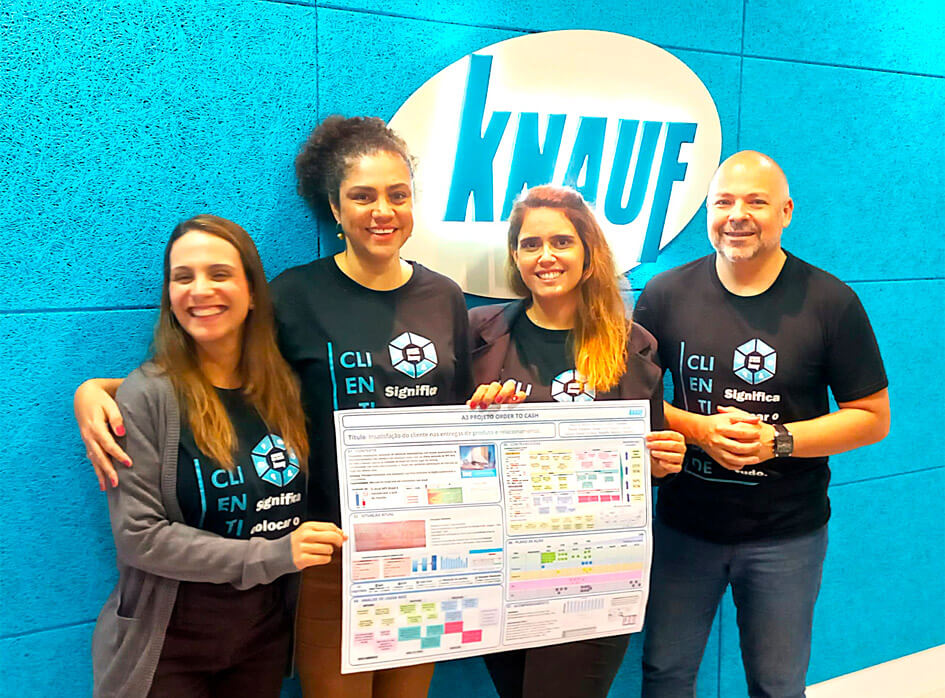
For example, titled “Customer dissatisfaction with product deliveries and relationships,” one of the main A3s put into practice analyzed why the Net Promoter Score (NPS) was not showing strong growth, which could lead to loss of market share given the fierce competition.
Then, with the help of the facts and data shown in the Mapping already done, macro objectives were defined to increase the NPS from 17% to 65%, and OTIF – "On-Time In-Full," a logistics indicator that measures the quality of a company's deliveries – from 86% to 95%. At the same time, the aim was to reduce lead time from three to two days, as a result of raising order release from 74% to 95% and reducing Finance blocks from 70% to 30%.
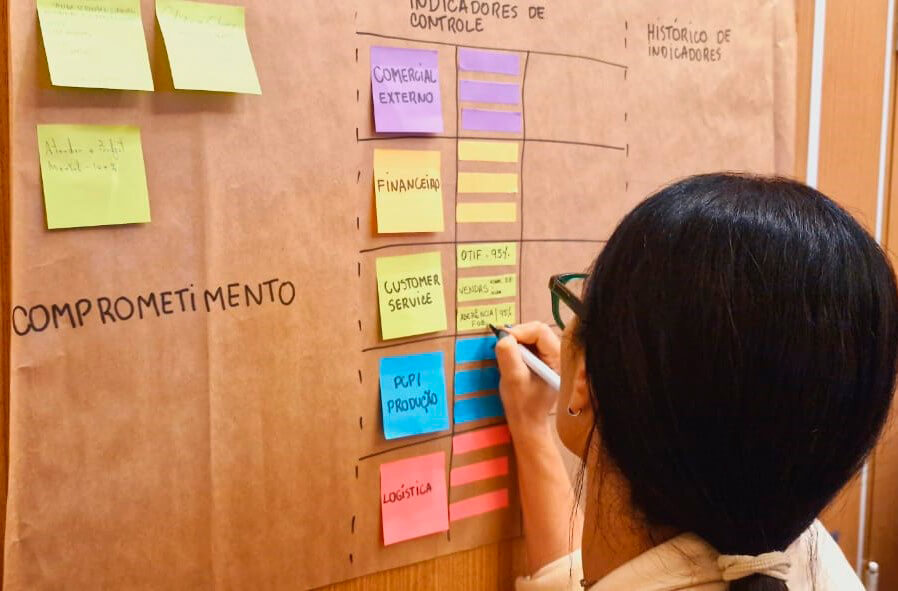
To this end, a plan with more than 60 actions was developed, along with a Daily Management (DM) process to follow up on all of it. For example, an experimental DM carried out in the shipping department, which was critical in this whole process. The department's “commitment,” the “control variables” and problem-solving methods were defined.
“This Shipping DM was essential to connect delivery needs, prioritizing everything that had been agreed with customers, acting on problems while there was still time to correct them and, above all, collecting data on the problems, through the identification of root causes, to generate efficient countermeasures as deviations were found”, the LIB consultant summed up.
Cultural change
This whole process has already produced phenomenal results – improvement in important indicators, a rise in an essential market ranking, an internal worldwide award... – but it is still under way. So it should still generate many other robust returns for the organization.
In any case, the company is also celebrating another result that is perhaps even more important, because it can make all of this lasting and sustainable: a significant transformation in people's mindset, attitudes and behaviors.
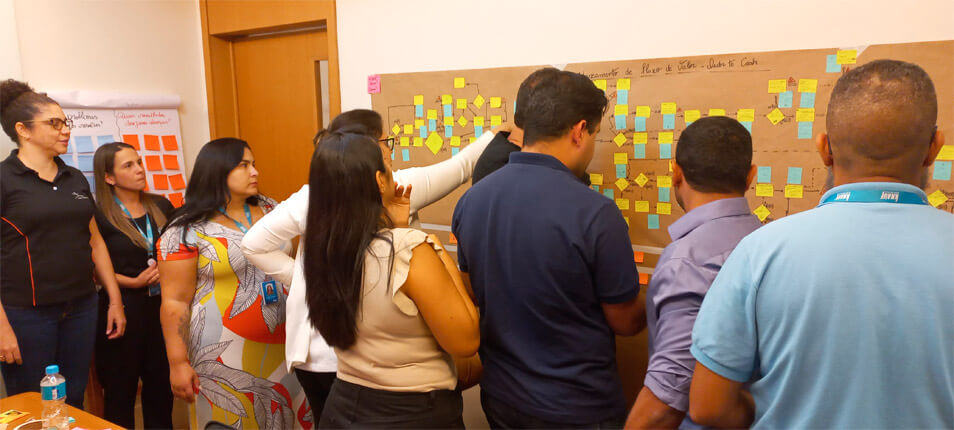

They began to see processes with “lean eyes.” That is, they started analyzing work and processes always with a view to revealing and solving problems. To doing things better every day. To thinking about the “flow” rather than the department. As if that were not enough, they began spreading what they learned, the new management concepts and practices, to other departments and even to other units.
In other words, Knauf's lean story does not end here. Much more is still to come. The company says that the search for the “perfect order” is only just beginning...