

Developing people is the key to consistent results: The Simon case
Changes came fast at Simon's plant in Toluca, Mexico, where, in just a few months, we paved the way for a complete turnaround.
Our reason for turning to lean thinking in the first place was the big drop in productivity we experienced during the Covid-19 pandemic, together with the large volume of orders we had to fulfill. Lean is not new to the Simon Group. The headquarters in Barcelona, Spain, already has plenty of experience with it, but for us it was all new.
We started this journey in January, when the Lean Institute came in to carry out a diagnosis of our processes. It quickly became clear that this would be a cultural turnaround that would solidify our use of standards and indicators and change the mindset across the organization. Through lean, we hoped to gain more control over our work and improve the overall performance of the plant.
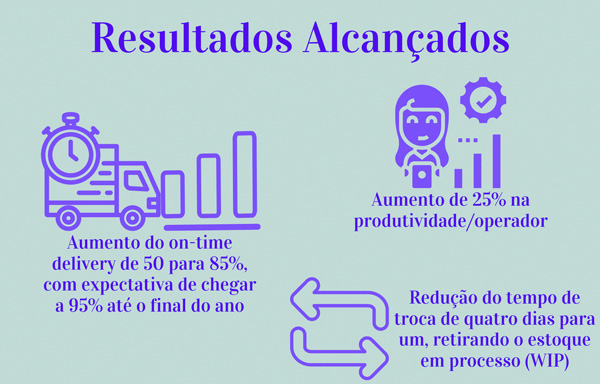
After the diagnosis, we began running kaizens across all our manufacturing operations – gradually reaching other areas of the business, those whose work is most closely linked to production. Among the results we achieved on our lines from these first seven kaizens are an increase in OTD (on-time delivery) from 50% to 85%, expected to reach 95% by the end of the year, a 25% increase in productivity per operator, a reduction in changeover time from four days to one day by removing work-in-process (WIP) inventory, and a considerable increase in our capacity to fulfill orders (products go straight from the line to the shipping area three times a day).
We are using lean techniques and practices throughout the plant. We created a skills matrix, for example, for a better approach to people development, and we are relying heavily on daily meetings to maintain communication between people and stay on top of any problems that may arise. This goes hand in hand with our indicators room: today we have a “KPI room” (it isn't an obeya yet, mainly because it doesn't look at the business as a whole, only at operations), where detailed indicators are used to track our progress and keep an eye on the work. Upon entering, anyone can understand the state of things at a glance.
Supporting our kaizen efforts, we also have people from purchasing, billing, customer service, etc. This helps the people in manufacturing because it brings the fresh and useful perspective of others involved in delivering value to customers, while also clarifying the synergies that exist between departments. This is probably what is behind the expansion of lean into other areas of the business, from human resources to sales.
Thanks to these improvements, the Toluca plant has gained control of its lines, made great progress toward built-in quality and empowered people to own their processes. We learned to do more with less and to have more control over the work (especially with regard to inventory levels). All of this led to the large increase in productivity we experienced.
Developing change agents and transforming leadership
Our development program, designed by Lean Institute Colombia, consists of providing training in lean thinking to a diverse group of people. They are now responsible for sharing lean knowledge and practices with the rest of the frontline team. Because of their new role as change agents and ambassadors of the methodology, people are seeing a new attitude in their leaders, which makes the transition to lean easier.
Of course, not everyone internalized the lean lessons easily or quickly. Some people fought it at first, mainly because they didn't believe change could come so quickly. Today these people are big supporters, and if we managed to change their minds, it's because we were able to show them quick wins and results that helped both the business and the operators in their day-to-day work. There is nothing more effective for making people understand the importance of thinking lean.
For a lean transformation to succeed, however, it isn't enough to have the buy-in of people on the front line. In fact, the biggest obstacle to a successful turnaround is usually leadership. Being aware of this problem, we are trying to engage other directors and the general manager in the transformation. They have been aware of it and supported it from the start, and they understand that change doesn't happen overnight. I myself have changed my leadership style considerably: I am much more present at the gemba than before, and I make an effort to be available to answer people's questions and help them in their problem-solving efforts. In my view, this gives them great confidence and makes them much more committed to the lean transformation.
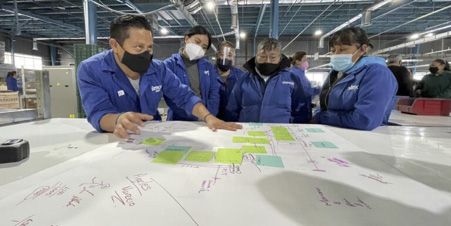
There is no doubt that our plant's journey is happening very quickly. We are taking big steps, but we are doing so consciously. There is certainly a sense of urgency in the air, but we also want to do things well – which requires helping people understand “why” we are trying to change the way we do things. Our emphasis is still on experimentation. We understand that the kaizen improvements we have made are just a first step. We learn new things every day, and we will continue to involve people in updating standards and making improvements.
Acting as a pilot project
Looking at the next steps, we want to consolidate the improvements we started with value stream mapping, extend the reach of daily management to our workshop and introduce other important tools to gain productivity. In our future, we see a complete business system at the Toluca plant, in which people are increasingly comfortable raising problems and autonomous in solving them.
Our efforts are being noticed across the Simon group at an interesting time, as headquarters is busy developing the Simon Production System. With the lessons learned and the solid practices we are developing, our plant can act as a pilot project and, later, as a coach for other sites in the group that wish to start a lean transformation. I believe we will be a great example, in particular, for those plants that – like us – have a lot of semi-automatic and manual work (as opposed to the group's more technologically advanced sites). We have a lot to learn, but also a lot to teach others.
We have already seen the great contribution lean can make in terms of cost reduction, increased productivity and – perhaps most importantly – inventory control, thus limiting the amount of money one invests in one's plant and connecting better with customer needs. Having a system that allows you to control costs and keep prices lower than your competitors' seems particularly critical nowadays, with rising costs threatening the financial results of companies around the world.