How 𝙝𝙤𝙨𝙝𝙞𝙣 points toward a common purpose
In its South American operations, ME Elecmetal had for some time been looking for ways to improve problem-solving capability and engage more people in the pursuit of strategic objectives. It was with this challenge in mind that we started talking to Instituto Lean Chile about the possibility of introducing hoshin kanri into our operations.
But hoshin was not our first venture into the lean world. Over the years, we experimented with various improvement techniques – from TPM to kaizen – especially in operations. In fact, the lean system we introduced (and, later, our hoshin work, with a particular focus on A3 thinking) was combined with our pre-existing management system – the ME Elecmetal Way. When we began our collaboration with the Instituto Lean with a series of pilot projects aimed at solving specific problems – both operational and administrative –, we quickly realized how compatible the two systems were.
What immediately made lean attractive to us was the opportunity to increase our people's ability to understand and solve problems. Indeed, the pilots we ran showed everyone what lean thinking is capable of: our people felt their voice was heard and realized they had a role to play in ensuring the company's success. In this sense, these initial projects and the more participative, horizontal organizational structure gave everyone a glimpse and were instrumental in securing the frontline support we needed to start our hoshin activities.
As general manager, it did not take me long to see the immense potential the lean philosophy had to connect an improved problem-solving capability to our strategy.
Hoshin to the rescue
ME Elecmetal already had a lot of experience in understanding the context in which it must operate. Thanks to market research and the great information we receive from our corporate office, we usually find ourselves well equipped to assess the situation around us and outline the best strategy. What we lacked was a way to engage more people in deploying that strategy, motivate them and solve problems more effectively.
Critically, strategy usually means much more than eliminating waste. Delivering on a strategy may involve developing a new product or entering a new market segment, for example. In our minds, the key to achieving such objectives is connecting as many people as possible to our strategy. We thought hoshin was the missing link in the chain.
Aware that introducing hoshin would represent a big change, we gave everyone a copy of John Shook's book “Managing to Learn”. The top three levels of leadership in the organization – about 70 people – were then trained in lean and hoshin. In the first year, the training sessions were in person, but we had to switch to virtual as soon as the pandemic began. Interestingly, Covid-19 helped us, because it forced us to harness the power of digital tools to stay close even while apart. With hoshin, this ability to follow up and keep communicating with everyone on the team was very important.
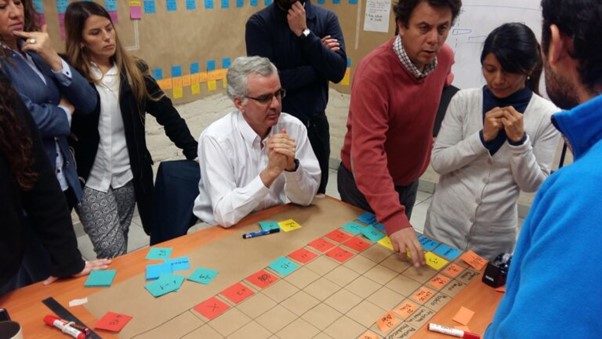
Under the new hoshin system, we extrapolate the main challenges of each year and assign a strategic A3 to each of them – to ensure there is clear ownership of the problem and that follow-up takes place. After making the VPs and key managers facilitators of the A3 process, we began to see a change in how people perceived work in the company: today, they feel they own the strategy and are more aware of what happens across the whole company. We quickly realized how many contributions to process improvement emerged from the unexpected interactions generated by processes as a result of catchball.
With the help of the Instituto Lean, we were able to secure buy-in to hoshin at the managerial level (something we struggled with a lot in the past, for example, with things like TPM) and clarify how our leadership style had to change. For some, these changes were hard to accept – especially those who were more hands-on and tended to develop an A3 on their own from start to finish. Despite the frustration and the many difficulties, we managed to empower people enough to trust the new system (discipline was very important here): the A3s that led to positive results became great examples we could leverage to support the company's cultural transformation.
Today, there seems to be an understanding that lean and hoshin are here to stay. Personally, I believe that, after the pandemic, living and breathing lean and hoshin is really the only viable way to secure a company's future. New generations do not want to work in organizations managed by command and control; instead, they want to be empowered and challenged all the time. Hoshin gives people the space and the opportunity to contribute to the strategy, as well as to grow professionally: three years after implementing hoshin, we have already seen many people change roles or take on more responsibilities.
Choose your battles
Over the years, as we sought to structure our management system, we made extensive use of the Balanced Scorecard. Even though this and other tools helped us handle a lot of data and work with boards, we found the Balanced Scorecard somewhat sterile and very hard to explain to people. As we looked for ways to bring the strategy closer to our employees and improve its execution, we introduced FranklinCovey's “war and battles” system – essentially, a way of translating complex KPIs into a manageable narrative that people can easily understand. This system is based on the idea – actually very similar to that of hoshin – that you choose the battles that will win the war. We began working with this system about six years ago, but we still had trouble deploying it to the lower levels of the company so that people could fight those battles. Hoshin changed things: it connected everyone to the strategy and brought a new logic to its deployment. It was the missing piece of the puzzle.
We still have a long way to go, but hoshin is already making us stronger as a business. Not only have we become more effective at focusing on our objectives, but we also see a better atmosphere at work, with more empathy, better interactions and improved collaboration.
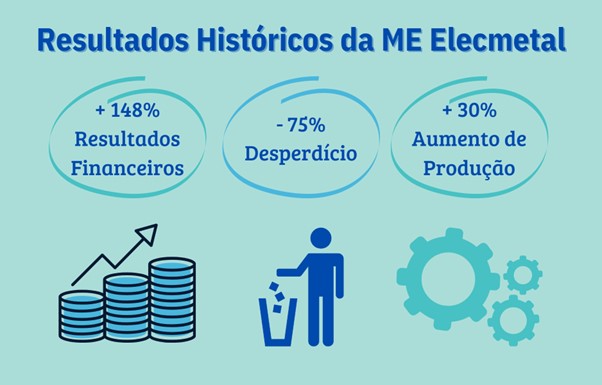
Both our performance and our ability to execute our strategy have improved greatly. In 2021, we had historic results in our South American operations: our financial results improved by 148%, we reduced waste by 75% and increased production by 30%. This would not have been possible if everyone at ME Elecmetal did not feel part of the same project. Our people now understand the big picture and how their work contributes to it.
Coach's comments
By Rodrigo Calderón, President, Instituto Lean Chile
The process ME Elecmetal has been implementing to identify its True North is excellent. It involves an in-depth analysis of competitors and of the market context in which the company is called upon to operate. They are very structured in this activity and very effective in the way they communicate the strategy – with their “war-and-battles” narrative. But it was only when hoshin was introduced that the company found a way to connect that True North to every person in the organization. As people see the support of the general manager and the rest of the management team, they become willing to contribute to achieving the company's objectives.
It has been very rewarding to observe the cultural change that leadership is going through at ME Elecmetal. This transformation is based on three key leadership behaviors: asking questions, offering help and being present in the gemba. There are still challenges (we need to reach 100% of people), but what we have seen so far makes us very confident in ME Elecmetal's effort to make hoshin second nature for everyone.